Millie Tranter
The LighthouseMillie Tranter is the eighteen-year-old newcomer whose precarious refuge on Combe Island becomes entangled with Nathan Oliver’s last days. Found homeless in Pentworthy and taken to the island by Jago Tamlyn, she is given a room and work, but neither her position nor her future is secure. Her connection with Oliver is one of friendship, as she understands it; her part in carrying Dr. Speidel’s note makes her an important witness to a meeting that may never have taken place.
Arrival and background
Millie’s route to Combe begins with the loss of the ordinary supports that might have kept her housed. According to Mrs. Burbridge, Millie’s father left when she was very young, and she did not get on with her mother or her mother’s successive boyfriends. She left Peckham to live with her paternal grandmother in a village outside Plymouth. After about two years, her grandmother developed Alzheimer’s disease and was moved to a care home. Millie could not stay in the house, and its landlord had wanted her out; without money for rent, she lived rough until her funds ran out.
Jago found her begging on the seafront in Pentworthy while visiting a friend on a day away from the island. He and his friend took her to a fish-and-chip shop, where she was ravenous and told them her story. Jago then contacted Rupert Maycroft to ask whether she could return to the island on the launch and stay temporarily while arrangements were considered. Mrs. Plunkett later explained that Jago had a particular sympathy for young people: his sister had died by suicide after being seduced and made pregnant by a married man. In Mrs. Plunkett’s view, he may have recognized something of his sister in Millie.
Maycroft found Millie a vacant room in the stable block and work helping Mrs. Burbridge with linen and Mrs. Plunkett in the kitchen. The arrangement answered an immediate need, but it did not resolve what would happen to her next. Children were no longer allowed on the island; although legally an adult, Millie seemed to Maycroft to have a child’s unpredictability and waywardness. Mrs. Plunkett likewise considered Combe unsuitable as a permanent home for a young woman who needed people her own age and a proper job. Her welcome was therefore real but provisional.
Work and place on the island
Millie is the only young person on the Combe staff. Her duties extend beyond the linen and kitchen: she helps Mrs. Plunkett, waits at table, and makes herself generally useful to Mrs. Burbridge. Mrs. Plunkett describes her as a good worker when the mood takes her, while noting that she does more sewing than kitchen work. The work is practical and varied, giving her a place within the household without removing her dependence on the people who arranged her stay.
Her entrance into Maycroft’s office reflects the brisk, unceremonious energy others associate with her. He is thinking about the mistakes he believes he made in staffing the island when a bang sounds at the door and Millie appears. She often visits the office, he observes, seeming to materialize on his side of the door before he hears her knock. On this occasion she has come from the harbour with urgent news: Oliver is furious because Dan Padgett has lost Oliver’s blood sample overboard, and Oliver has ordered Maycroft to come at once. Millie is thus not merely part of the household’s labor force; she moves between its residents and carries news of a conflict that has immediate consequences.
Friendship with Nathan Oliver and the appointment note
Millie says that she and Oliver became friends when he was on the island the previous July, soon after Jago brought her there. They used to meet and go for walks. When challenged after Oliver’s death, she insists that she liked him and that he had been all right to her, then drops her voice to call them friends. Her distress is sharpened by the sense that the other residents wanted him gone: she accuses them of wanting him off the island, while distinguishing her own attachment from their dislike. Mrs. Burbridge sees the relationship differently, describing Oliver’s treatment of Millie as exploitation. That is Mrs. Burbridge’s judgment; the evidence of Millie’s own account establishes her affection and the walks they shared, but does not settle the disagreement.
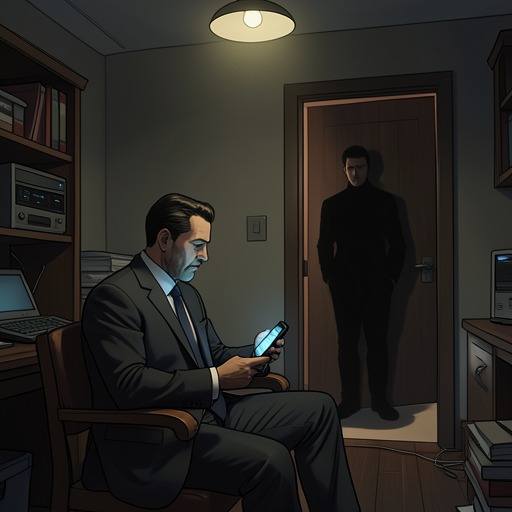
The friendship gives particular weight to Millie’s handling of Dr. Speidel’s note. Dr. Speidel had asked her to take an envelope to Oliver. When Adam Dalgliesh asks whether she received it, Millie initially answers evasively that he might have given it to her. She later explains that she drove the buggy to Peregrine Cottage, saw no one, and put the note in the porch postbox. She heard Miranda Oliver speaking to someone in the sitting room but did not want to give the note to her: it was addressed to Oliver, not Miranda, and Millie disliked Miranda. She says she would have delivered it to Oliver if she had seen him.
Millie also admits telling Jago about the proposed meeting. That information matters because the note requested a meeting with Oliver at the lighthouse at eight o’clock, while Oliver was reportedly seen leaving Peregrine Cottage at about seven-twenty. The investigators consider whether the note reached him and who might have known of the appointment. Millie’s account establishes that she left it in the postbox, not that Oliver personally received it; she does not know whether it was still there or who else might have encountered it.
Death and aftermath
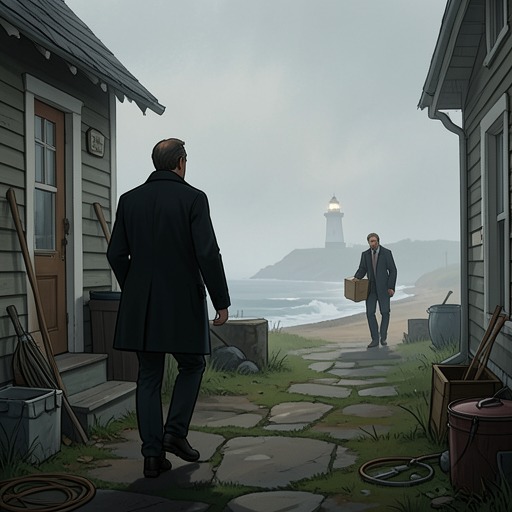
When the mist lifts at the lighthouse, Millie is beside Jago as Oliver’s hanging body becomes visible. She stares up at him and screams continuously, scarcely drawing breath. The stark image of the body suspended from the climbing rope against the lighthouse turns her earlier news-bearing role into direct witness to the killing’s aftermath. Her response is immediate and physical, not the detached curiosity of someone drawn to a mystery.
During Dalgliesh’s questioning, Millie’s account of the note gives way to an outburst of regret. She wishes she had never taken it and wishes she had torn it up. She then insists that she liked Oliver and that they were friends. Her anger is aimed both at her own involvement in carrying the message and at the assumption that the people around her had no affection for the dead man. The outburst reveals the personal meaning she attached to Oliver, while leaving the precise significance of the note unresolved.
Later, Millie works with Mrs. Burbridge on the church vestments. They arrange skeins of colored silk and carefully fold the cope into tissue paper for a long cardboard box. Millie’s earlier violent distress has subsided into what the narration describes as sulky acquiescence. Mrs. Burbridge asks whether she told Dalgliesh the truth about the note, suggesting that people sometimes omit details to protect someone else. Millie denies lying and asks who has accused her. The exchange leaves her account under scrutiny, but the evidence here does not establish that she concealed a particular fact.
Narrative role
Millie occupies an uneasy position between being protected and being treated as a problem to manage. Jago’s intervention and Maycroft’s decision give her temporary safety and employment, yet both Mrs. Plunkett and Maycroft recognize that the island cannot provide her with a lasting future. Her presence also exposes the limits of Combe’s secluded order: the island can offer a room and work to someone in immediate need, but it cannot remove the vulnerability that brought her there.
Her place in the Oliver investigation is similarly divided. She is a witness whose practical movements—the buggy ride, the postbox, the information shared with Jago—help investigators reconstruct the uncertain route of Speidel’s message. She is also a bereaved friend whose attachment is dismissed or questioned by others. The contrast between the formal inquiry and her emotional account keeps both aspects in view: the note has investigative importance, while her grief insists that Oliver’s death is not only a puzzle to be solved. Millie’s story, as established here, remains open-ended: she has found temporary refuge, but no settled future is described.